A single missed assignment is one thing. An entire semester slipping away is another problem altogether, and it's usually the second one that brings students here. When you need take my online course for me, our PhD and subject matter experts take over the full term, not just one week of it, handling every module from the opening quiz to the final exam. There's no upfront payment, every submission is written by an actual person rather than AI, and the whole process runs through VPN protected logins so your account never looks any different than it always has.
Truereviews
Merchantcircle
Brownbook
Four weeks into the term already feels unrecoverable, and every new module just adds to a pile that was never going to get smaller on its own.
Five classes in one semester leaves no realistic way to give each one the attention it needs without something eventually being dropped.
Keeping grades steady across sixteen weeks takes more than one good week of effort, and most students run out of that consistency by midterms.
Do my online course for me is rarely a request for one assignment. It usually means the whole structure, week after week, needs to be handled by someone who isn't going anywhere until the course ends. That includes weekly module handling as new content unlocks, discussion board management with real responses instead of filler comments, every quiz and assignment on schedule, and both the midterm and final exam when they arrive. One dedicated course expert manages all of it rather than a different person being assigned each week, which keeps the writing style and the grade pattern consistent from the first submission to the last.
Pay someone to do my online course, and you get a single point of contact for the whole term, someone who sends weekly progress updates and keeps grade tracking visible throughout the semester instead of leaving you wondering what's happening behind the scenes until finals arrive.

The same person who starts your course in week one is still there for your final exam, not a rotating handoff between strangers.
A B or Better Guarantee stands behind the entire semester, backed by a full refund policy if that result isn't delivered.
No upfront payment means the commitment builds gradually as the work gets delivered, not before any of it exists.
VPN protection and city IP matching keep your login activity consistent across sixteen weeks, not just for a single session.
A semester that is already three weeks behind does not get easier to catch up on by week six. Reach out through live chat or WhatsApp, get a free quote for full semester coverage, and lock in a B or Better Guarantee before another module goes live.
The pattern behind this search is almost never about one rough patch. It's about the math simply not working out. A single parent finishing a degree between shifts might get forty minutes of quiet time on a good night, and that's before anyone needs something or the internet decides to act up. Students in nursing programs deal with a version of this that leaves even less room to breathe, since a twelve-hour clinical rotation doesn't care that a module was due at midnight.
Military partners relocating mid-term, caregivers managing a parent's appointments, or anyone working two part-time jobs to cover tuition all run into the same wall eventually: there are simply more hours of coursework than there are hours in the week. None of this is about avoiding the material. It's about a schedule that was never built to accommodate five different deadlines competing for the same three free hours.
A course only gets meaningfully easier to manage when every part of it is accounted for, not just the assignments that happen to feel urgent on a given Tuesday. That starts with weekly readings, quizzes, and homework getting completed the moment a module unlocks, so nothing sits untouched until it becomes an emergency. Peer discussion requirements are handled with actual thought behind them, referencing classmates by name and responding to what they specifically said, rather than a generic reply that could fit under any post in the thread. Midterms don't get treated as a bump in the regular workflow either. They're prepared for as a distinct checkpoint, the same way a student who was fully caught up would approach one. In addition, once the course reaches its final stretch, everything gets tied off properly, meaning the last exam is completed, the last submission goes in on time, and the transcript reflects a course that was actually finished rather than one that trailed off two assignments short.
There's a noticeable gap between a service that hands your course to whoever happens to be free that week and one where a single person carries it from the first login to the last page. Someone who has been inside your course since orientation week already understands how your instructor phrases feedback, what tone earns full marks on a discussion post, and what the earlier submissions in the course actually looked like. That context doesn't transfer cleanly when a new writer takes over halfway through, which is exactly the kind of inconsistency that tends to get noticed. Matching happens once, at the start, based on the subject itself, not reassigned partway through because someone's schedule opened up.
The result is a writing voice that stays steady from the introduction assignment to the capstone project, and a direct contact who can answer a question about week eleven without needing a full recap of everything that happened before it.
Committing to one course for an entire term is a different kind of trust than sharing a login for a single essay, and platform fluency matters accordingly. Canvas and Blackboard make up the backbone of most university systems in the country, and neither requires any adjustment period before work begins. Moodle shows up frequently in corporate certificate programs and international institutions, while D2L Brightspace tends to appear in public university systems that migrated away from older software. Courses tied to specific textbook publishers, whether that's a Pearson access code or a McGraw Hill Connect portal, come with their own interface quirks that take most people time to figure out, time our specialists have already spent. Self-paced formats built through platforms like Edgenuity or Straighterline are equally familiar territory, which means a full course commitment isn't limited to a narrow band of schools or a single style of course delivery.
Logging into an account once is a low-risk action. Logging into that same account consistently for four straight months is a different situation entirely, and it gets treated that way here. City-matched IP routing keeps every session tied to a location consistent with your normal pattern, so nothing about months of continuous access looks out of place to a monitoring system. Every credential exchanged and every payment processed runs through an encrypted connection, and none of that information gets passed along to anyone outside the two people involved in getting your course finished.
Confidentiality isn't an add-on policy here, it's the baseline. And in the rare case a course doesn't reach the outcome it was supposed to, a refund puts that financial exposure back where it belongs, on the service, not on the student who trusted it with an entire term.
Someone fluent in organic chemistry reaction mechanisms isn't necessarily the right person to analyze a Shakespeare text, and pretending subject expertise is interchangeable is where a lot of course help falls apart. Math, Biology, Chemistry, and Statistics coursework goes to people who built their own academic background in those exact fields, not writers stretching outside familiar territory. Specialists who understand clinical terminology on its own terms, since general writing ability doesn’t substitute for that kind of specific fluency handle nursing coursework, including anything tied to HESI or ATI benchmarks. Accounting, Finance, and Marketing courses go to people who've actually worked with financial statements and campaign strategy outside a classroom setting. Literature, Psychology, History, and Law coursework, meanwhile, land with specialists whose real strength is argument and analysis, which happens to be exactly what those courses grade on, week after week, from the first response paper to the last.
The process begins the same way any single assignment request would, by sharing course access, the current syllabus, and whatever module is active right now, so context isn't missing from day one. From that point, a subject-matched expert is assigned based on the course content itself, someone who stays attached to that course rather than being swapped out once the workload picks up. Once everything is confirmed, updates come through regularly so grades and progress stay visible without needing to check the account personally.
By the time the course reaches its final week, the objective was never just getting through one difficult stretch. It was finishing the entire term with a grade that reflects steady, consistent work from the very first module to the very last.
Thousands of full semesters have been completed under this same model, each one backed by a B or Better Guarantee and reflected honestly on our website. No upfront payment is required to start, regardless of how many weeks are left in your term.
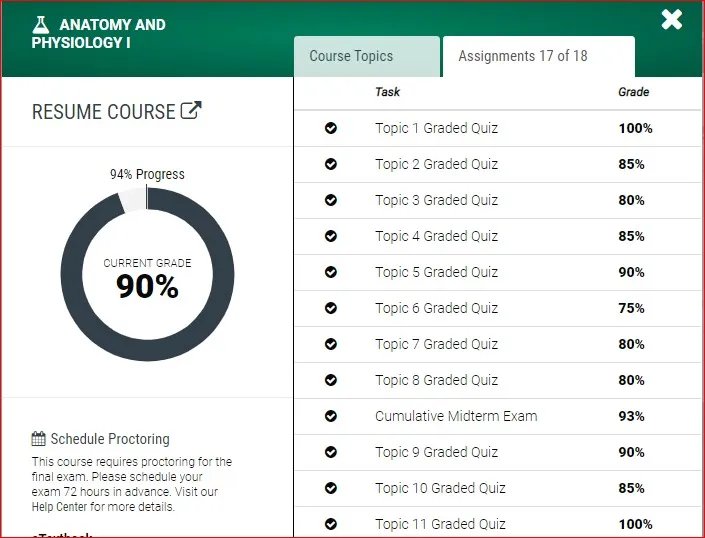
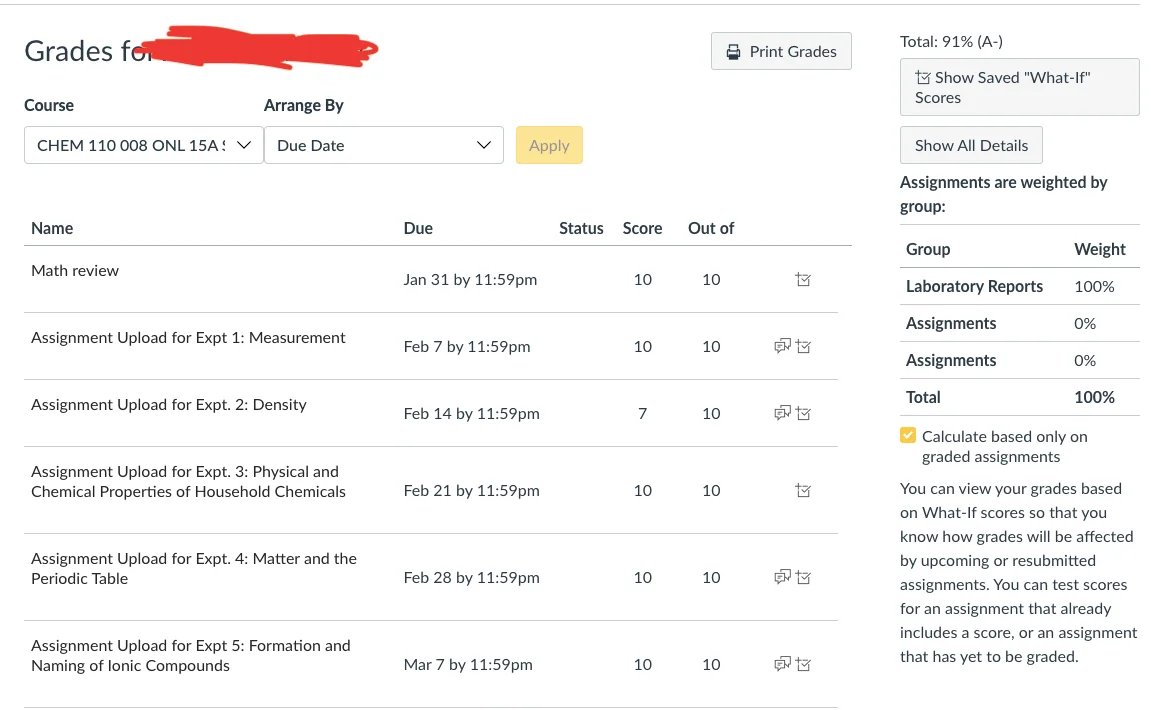
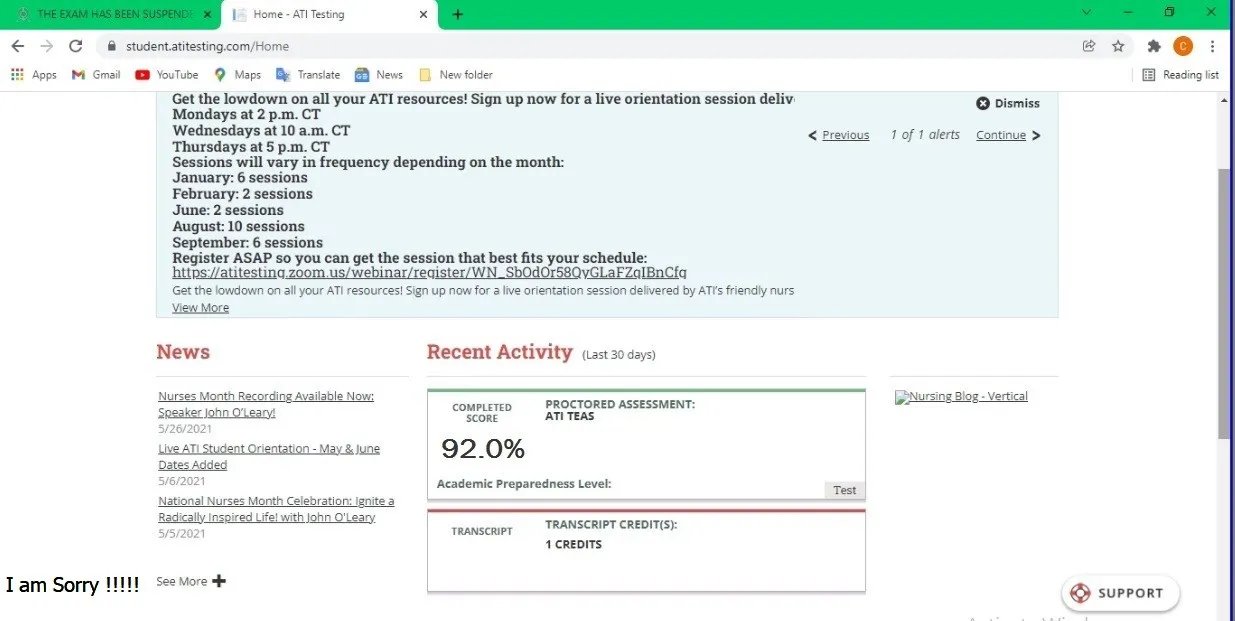
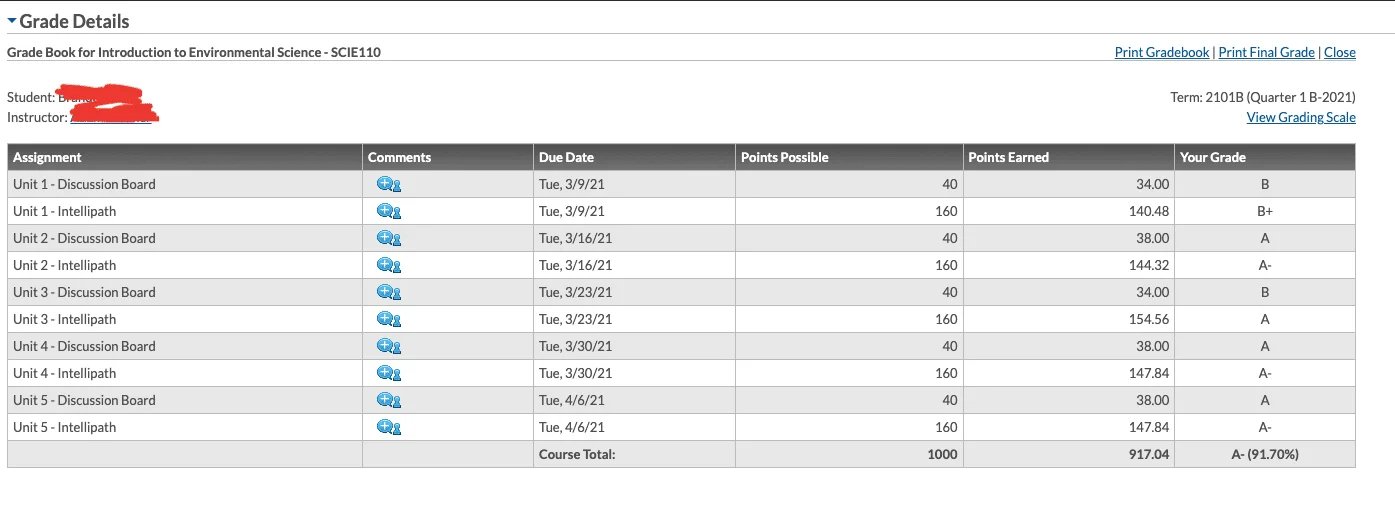
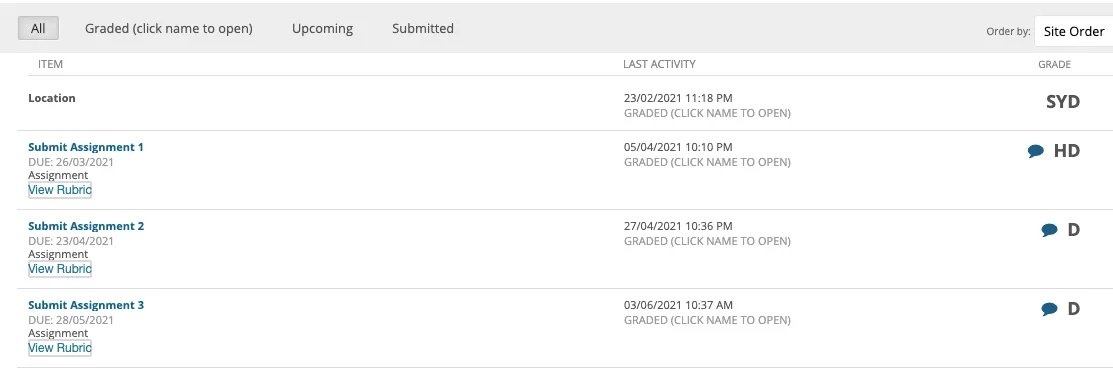
"I was taking five courses in one term while working part time at a warehouse, and my Marketing course on Moodle was the one slipping fastest. One expert stayed on it from the second module through the final project, and I ended up with a B plus in a class I genuinely thought I'd fail by October."
"English isn't my first language, and my History course on D2L Brightspace required weekly discussion posts I was spending hours just trying to phrase correctly. Having someone handle the entire semester meant I could actually focus on my other courses instead of losing every evening to one class."
"My son was born three weeks into the semester, and there was no version of that term where I was keeping up with my Biology coursework on Edgenuity. The same person covered everything from week two onward, quizzes, labs, the works, and I still finished with a solid grade."
"I switched majors halfway through the year and ended up with a Sociology course on Pearson that didn't match anything I'd studied before. Rather than trying to catch up on unfamiliar material mid-semester, I had it handled start to finish, and it turned out to be one of my better grades that term."